Decentralized Command in the Age of AI
Lessons From a Sinking Dhow

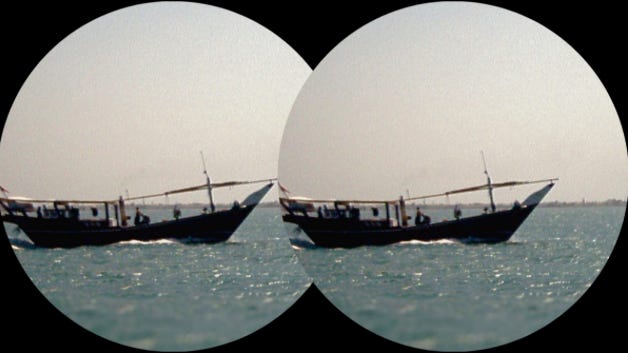
When the Lights Went Out in the Indian Ocean
In my first tour as a young Naval Officer aboard the USS Philippine Sea, we were tasked with intercepting two dhows used by Al Qaeda for drug smuggling - operations that financed terrorism in the region.
At dawn, our boarding teams captured the vessels and took the smugglers into custody. Mission accomplished.
Then came my first command.
Those dhows had to be taken back to Oman and turned over to local authorities. The Captain handed me the orders and the boat.
A tiny wooden dhow, with a temperamental diesel engine, a three-person crew, and a very simple mission: get to Omani waters safely.
My crew? A crusty Vietnam vet engineer who could fix anything, a communications specialist, and a 19-year-old kid fresh from boot camp.
⸻
“Sir, We’re Taking on Water”
Two nights into our slow crawl toward Oman, I heard the sound of water sloshing below deck.
The engineer went down to check it out. Twenty minutes later, he came back up and said the words no officer wants to hear:
“Sir, we’re taking on water... and I can’t fix it.”
By 3:30 a.m., our electrical system had shorted out. The radio, lights, GPS — all dead. We were invisible in the dark, drifting in rough seas.
Unbeknownst to us, the Philippine Sea saw our lights disappear and assumed the worst. The Captain ordered full speed to our last known position.
Onboard our little dhow, we cracked open chem lights — those big glow sticks — to find a handheld radio and create some visibility. Waves were washing over the deck, oil mixing with seawater. Then, out of the black horizon, the massive silhouette of the Philippine Sea appeared, charging toward us.
We waved our chem lights like mad. They saw us just in time.
It was too rough to attempt a rescue, so we’d have to wait until dawn. I gathered the crew, reviewed emergency procedures, and had them climb atop the pilot house — the highest point — while I stayed at the helm.
At 6:30 a.m., the seas calmed enough for a rescue. We made it back aboard the Philippine Sea. Our dhow didn’t. It sank beneath the waves (with a little help from Philippine Sea’s 50 caliber machine guns).
As we stepped onto the deck, soaked and exhausted, the old Master Chief turned to me and said:
“Lieutenant, I didn’t think you had it in you. But you handled it as best as it could’ve been handled. I’ve got a newfound respect for you.”
⸻
The Leadership Principle That Saved Us
That night at sea taught me what Decentralized Command really means.
Our mission was clear: get the dhow to the Omani authorities.
The Captain trusted me, a 24-year-old junior officer, to make the calls.
When everything started to go wrong, there was no checklist for what to do when you’re taking on water in the dark. You rely on judgment, preparation, and trust in your people.
That’s Decentralized Command in action:
Empowering those closest to the problem to make decisions — and equipping them with the training and clarity to do so under pressure.
⸻
Why This Matters Now
Fast forward to the corporate world — and to the era of AI-driven decision-making.
I see a lot of organizations repeating an old mistake: centralizing control. Too many layers of approval. Too many dashboards. Too little trust in the people on the front lines.
But change today moves faster than any approval chain.
And uncertainty, whether in combat or commerce, always favors those who can adapt the fastest.
Decentralized Command gives organizations that edge. It rests on three pillars:
Clarity of Intent – Everyone knows the “why,” even when the “how” changes.
Trust at the Edge – The people closest to the action make the call.
Learning Loops – When something breaks, debrief fast, fix it, and move forward.
⸻
Leadership in the Age of AI
AI will keep getting smarter, but the organizations that win won’t be those with the most data or the biggest models - they’ll be the ones with the most empowered humans.
Leadership today isn’t about control.
It’s about intent, trust, and judgment.
Because when the lights go out - whether in the middle of the ocean or the middle of a market disruption - your people need to know what to do, why it matters, and that you trust them to act.
The best leaders don’t need to be everywhere.
They build teams that can lead anywhere.